Looking Back at 2016 & Forward to 2017
January 8, 2026
WHAT DOES 20 WELLS REPRESENT, YOU MAY ASK? All 14 board members were present for the 2017 Annual Board Meeting…
If you’ve ever considered making a water well donation, you’ve probably asked a simple question: How much does it actually cost to drill a well in Africa?
The answer is more complex than most people realize.
Some organizations quote $5,000. Others list $10,000. Many established nonprofits report costs closer to $14,000–$15,000 per well when using third-party drilling contractors. [Source: https://africanwellfund.org/faq]
So what’s the real number? And more importantly, what determines whether a well keeps working five years later?
In this guide, we’ll break down:
If you’re researching where to direct your water well donation, this is what you need to know.
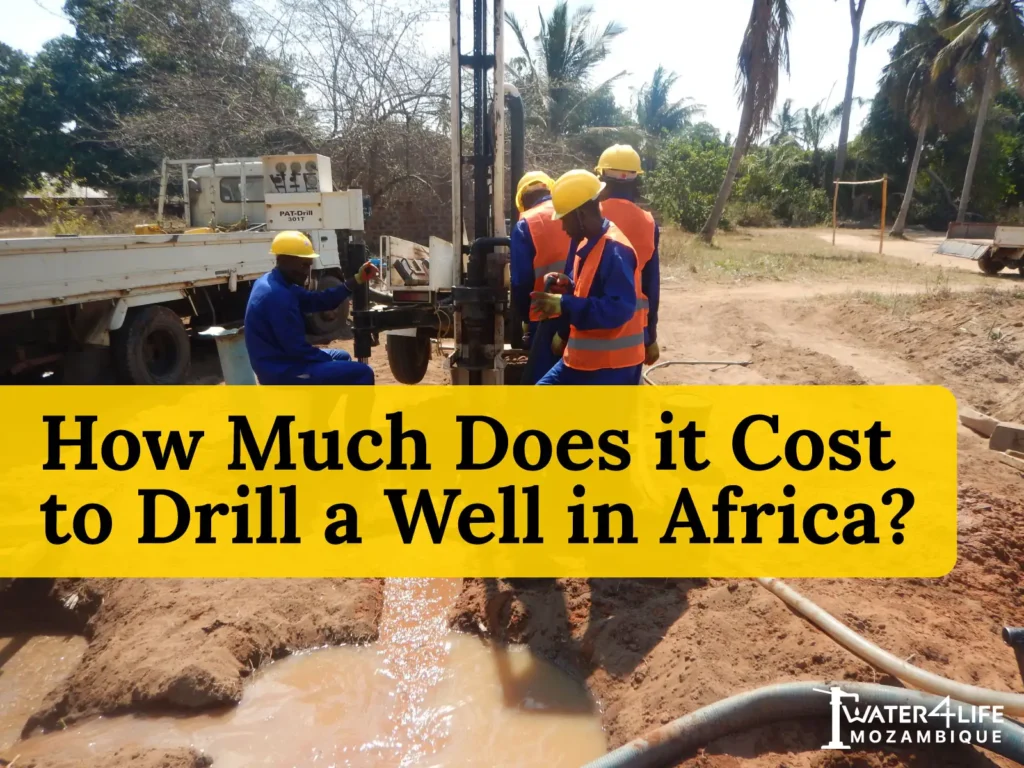
Across sub-Saharan Africa, the cost to drill a deep borehole well commonly ranges from $10,000 to $15,000 or more, depending on depth, geology, transportation logistics, and contractor structure.
For example:
The reality is this:
Drilling is only part of the expense.
A properly installed, sustainable borehole well typically includes:
When outside contractors are hired, overhead increases further:
That’s how many projects approach or exceed $15,000 per well.
One of the biggest cost variables in any well project is depth.
Shallow wells are cheaper.
Deep wells are more durable.
Many failed wells across Africa were drilled to minimal depth to save cost. During dry seasons, shallow aquifers can recede, leaving communities once again without water.
The World Bank’s rural water supply research shows that sustainability is not just a matter of drilling a hole. It depends on quality planning, construction standards, and technical decisions such as appropriate drilling depth and hydrogeological assessment, all of which influence whether a borehole continues to serve a community over time. [Source: https://www.pseau.org/outils/ouvrages/practical_action_rural_community_water_supply_sustainable_services_for_all_2021.pdf]
In simple terms:
If a well doesn’t go deep enough, it may not last.
Drilling deeper means:
All of these factors increase upfront costs, but they also dramatically increase long-term reliability.
When evaluating a water well donation, it’s important to ask not just “How much?” but also “How deep?” and “How long will it last?”
According to studies cited by organizations like the Rural Water Supply Network (RWSN), an estimated 20–30% of rural water points in sub-Saharan Africa are nonfunctional at any given time. [Source: https://www.ircwash.org/sites/default/files/RWSN-2010-Myths.pdf]
Common reasons include:
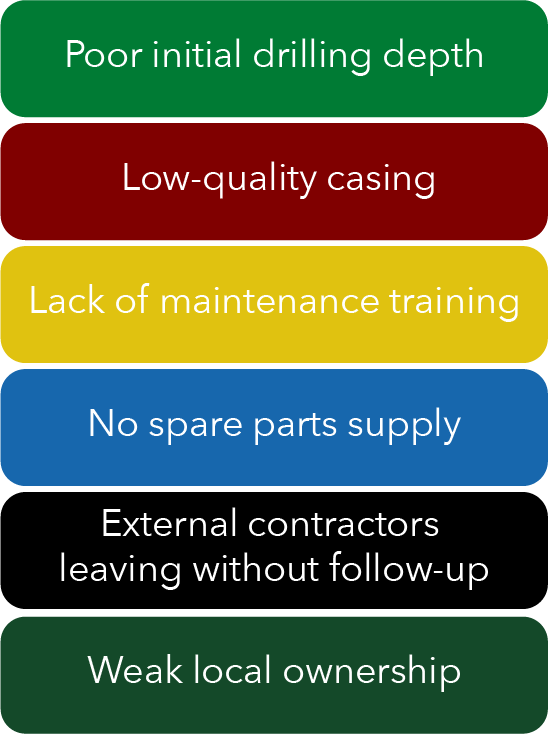
A well is not a one-time installation. It is long-term infrastructure, and infrastructure without community ownership often deteriorates.
This is why cost alone can be misleading, because a $7,000 well that fails in three years is far more expensive than a deeper, well-managed project that lasts 20 years or more.
To understand what your water well donation truly funds, here’s a simplified technical breakdown of where money typically goes in a $15,000 contractor-based well project:
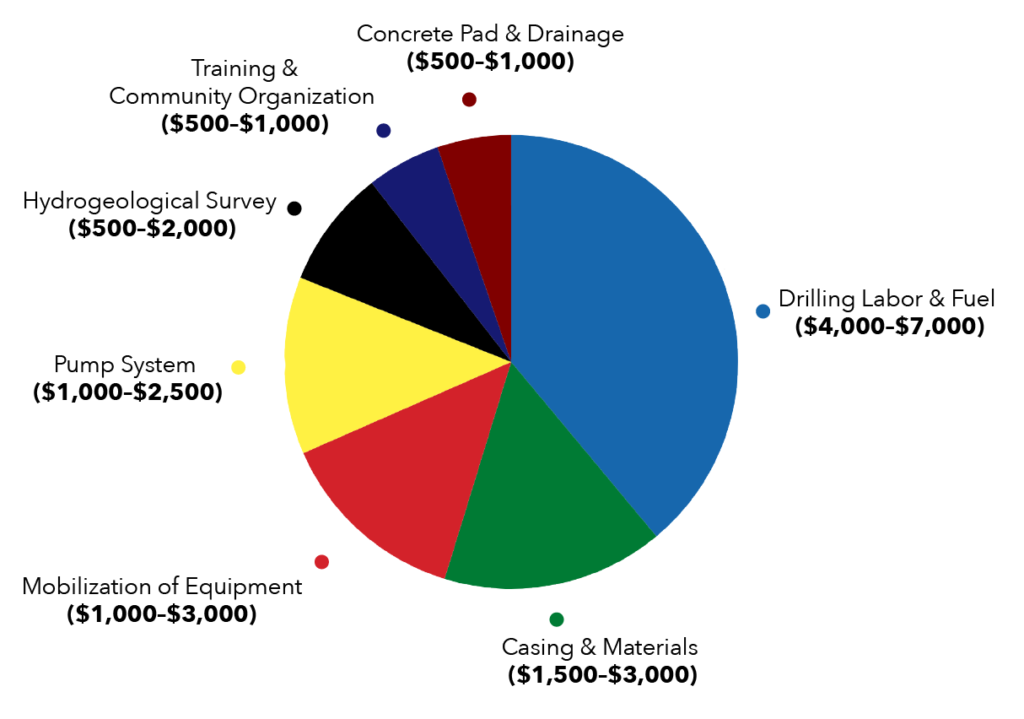
Professional assessment to locate viable aquifers.
Transporting large drilling rigs across rural terrain is expensive, especially when equipment is rented or shipped across regions.
Actual drilling time varies depending on geology. Hard rock formations increase labor and fuel usage significantly.
PVC or steel casing to prevent collapse and contamination.
Hand pump systems like the India Mark II are common. [Source: https://en.wikipedia.org/wiki/India_Mark_II]
Critical for preventing contamination.
Establishing water committees and maintenance systems.
Salaries, reporting, international management, and fundraising expenses.
Add contractor margins and overhead and total project cost often approaches or exceeds $14,000.
This is standard practice in many multi-country NGOs.
Now let’s narrow the lens to see how Water4Life Mozambique does it differently.
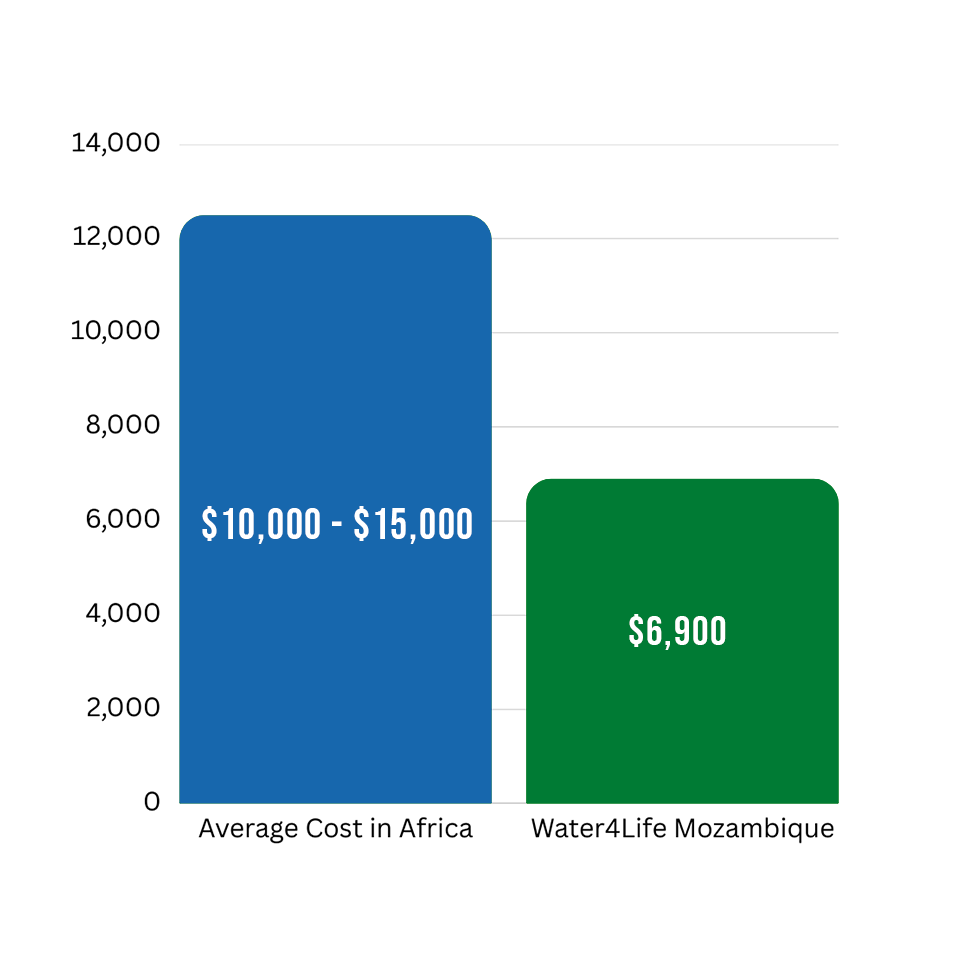
While the average cost to drill a well in Africa often approaches $15,000 when using third-party contractors, our focused in-country model allows us to drill wells in Mozambique for $6,900, all in.
That number includes no hidden add-ons, no partial funding stages, and no “installation only” pricing.
What makes this possible?
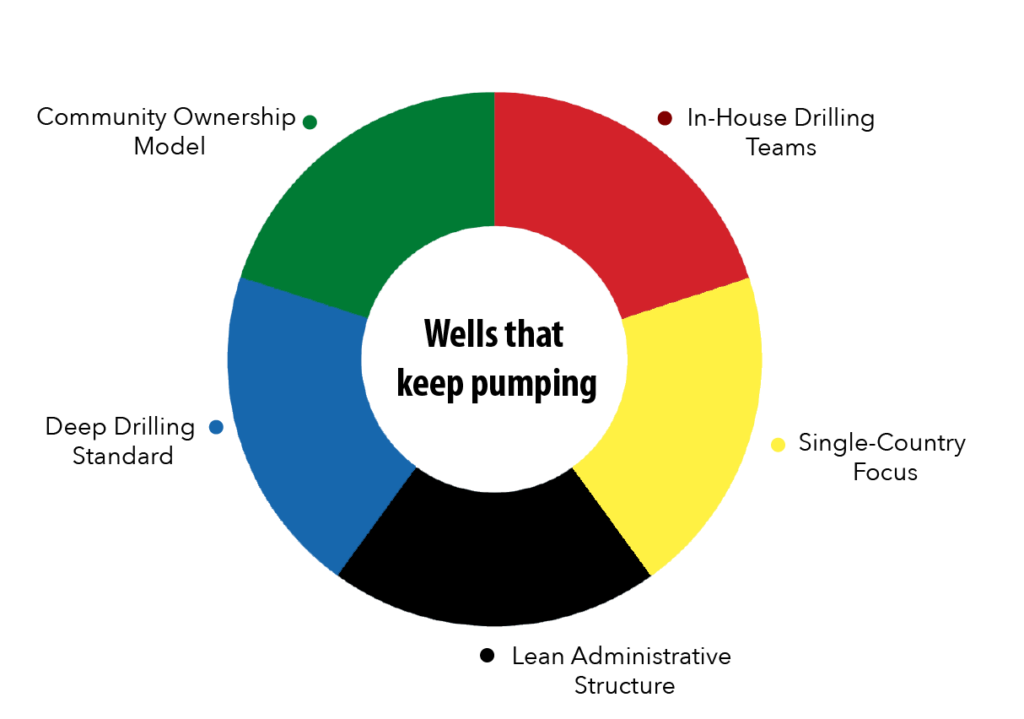
Rather than outsourcing to external contractors, Mozambican drilling teams operate locally with owned equipment.
This eliminates:
Operating in one country dramatically reduces:
Focus creates efficiency.
In our model, 100% of public donations go directly to wells.
Administrative costs are covered separately by our Board of Directors, not taken out of your water well donation.
We drill our wells to 100ft (30m), nearly twice as deep as typical minimal-depth projects, so we can reach more stable deep-water aquifers and reduce dry-season failure risk.
Each village we partner with receives:
The result?
Wells that keep pumping.
Mozambique remains one of the poorest nations globally, with significant rural populations lacking access to safe drinking water. According to UNICEF data, millions in Mozambique still rely on unsafe water sources, contributing to preventable disease and child mortality. This has been even more exacerbated by the recent flooding crisis. [Source: https://www.unicef.org/press-releases/mozambique%C2%A0heavy%C2%A0floods-are-turning-unsafe-water-and-malnutrition-deadly-threat]
In many rural villages:
When a deep well is installed at the center of a village:
That’s why clean water is not the end goal. It is the foundation for a host of new opportunities.
When you compare:
Typical contractor-based well: ~$14,000–$15,000
Focused Mozambique well: $6,900
You are not comparing “cheap” versus “premium.” You are comparing structure.
A lean, in-country drilling model removes layers that inflate cost, all without reducing depth, quality, or sustainability.
For donors evaluating a water well donation, this changes the equation because your gift and impact can stretch further.
Anyone can drill a hole in the ground, but a sustainable water solution requires:
The most important question to ask when considering a water well donation in Africa isn’t “How much does a well cost?”
It’s “How long will this well serve the people?” and “Does this model empower the community to support themselves or create dependency on foreign aid?”
We believe our deep water well solution is the right choice on both accounts.
Before you give, ask:
Good donors ask good questions.
Strong organizations welcome them.
The average cost to drill a well in Africa often ranges between $10,000 and $15,000 when third-party contractors are used. But through our focused, Mozambique-first model, Water4Life Mozambique can drill deeper, longer-lasting wells for $6,900, all in.
No inflated contractor markup.
No multi-country bureaucracy.
No diversion of public donations into overhead.
Just clean water for an entire village for generations to come.
If you’re considering a water well donation, you deserve clarity, transparency, and measurable impact.
Clean water reduces disease, restores dignity, and gives girls the time they need for school.
Safe water wells strengthen entire communities, and when done right, that strength lasts for generations.
To learn more about drilling a well in Mozambique or to sponsor a village, check out the rest of the pages on our site, and when you’re ready to get involved, click here: Join the Mission
Most contractor-based wells in Africa cost between $10,000 and $15,000 depending on location, depth, and materials. In Mozambique, sustainable wells can be drilled for $6,900 through our focused in-country model.
Cost varies based on drilling depth, transportation, equipment ownership, contractor markup, and administrative overhead. Deeper wells cost more upfront but last longer.
Depth depends on geology, but deeper wells of at least 100ft (30m) that reach stable aquifers are more reliable during dry seasons. Shallow wells are cheaper but more prone to failure.
Wells often fail due to shallow drilling, poor materials, lack of maintenance training, or absence of community ownership structures.
When you partner with Water4Life Mozambique, yes! In our model, 100% of public donations go directly to wells, with administrative costs covered separately by our Board of Directors. To get involved, just click here: Join the Mission