Looking Back at 2016 & Forward to 2017
January 8, 2026
WHAT DOES 20 WELLS REPRESENT, YOU MAY ASK? All 14 board members were present for the 2017 Annual Board Meeting…
When most people support a water project, the assumption is straightforward: a well is drilled, clean water becomes available, and the problem is solved. It is a compelling and intuitive narrative, and in many cases, it is the story that is presented.
However, the reality across parts of sub-Saharan Africa is more complex. A significant number of wells that are installed with good intentions cease to function within a relatively short period of time, leaving communities in a position that is often not much different from where they began.
For this reason, the more important question is not simply whether wells are being built, but whether they are still working years later.
Understanding why water wells fail in Africa requires looking beyond installation and examining the broader systems, decisions, and assumptions that determine long-term outcomes. Without that perspective, efforts that appear successful in the short term can ultimately fall short of delivering lasting change.
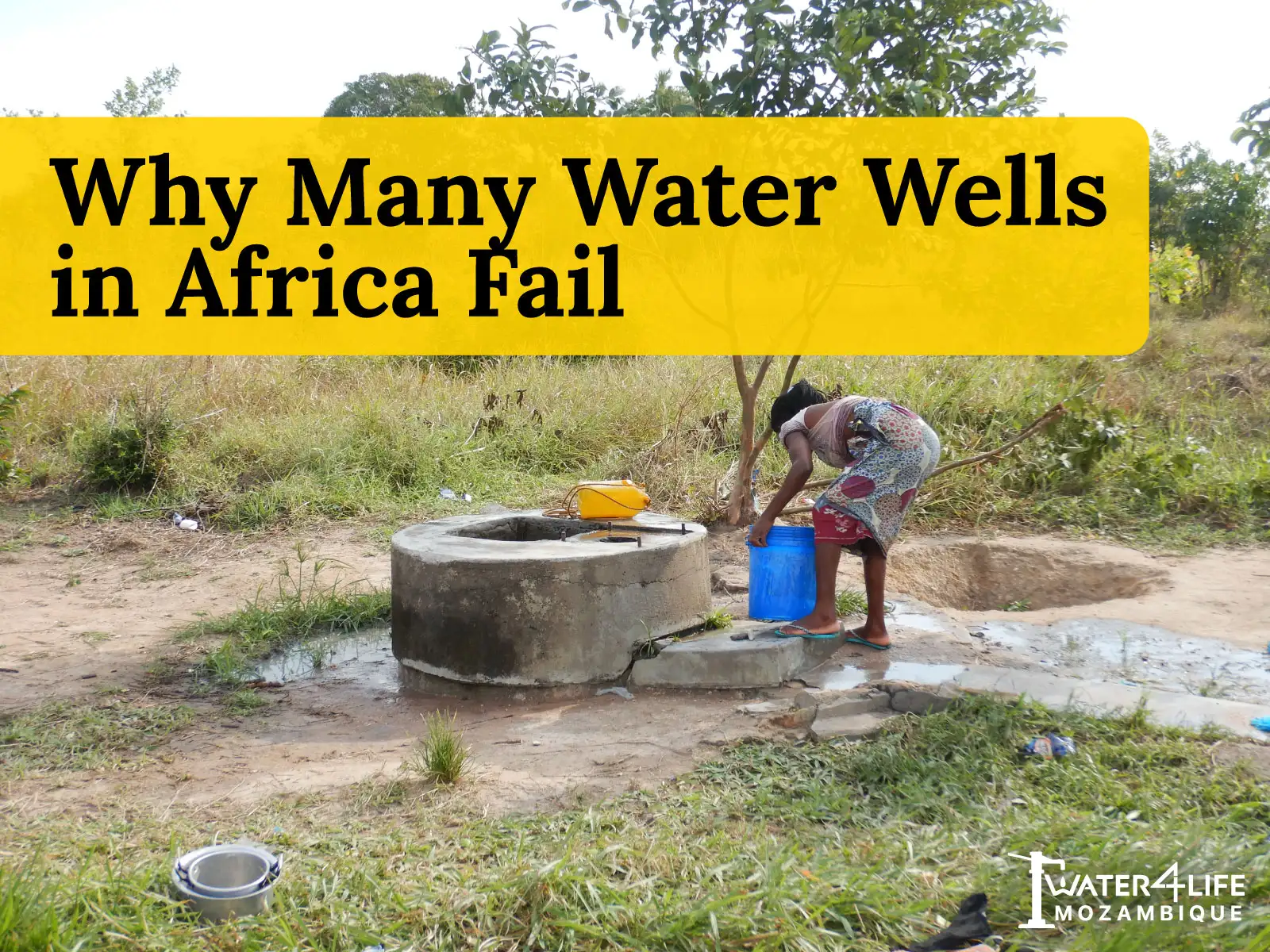
It is widely recognized that access to clean water in Africa remains a critical issue, and for good reason. Millions of people still depend on unsafe or unreliable water sources, and expanding access is an urgent and necessary goal.
However, access alone does not guarantee a meaningful or lasting solution. A well that provides water for a limited period of time but later becomes nonfunctional does not resolve the underlying problem; it merely postpones it.
In many regions, rural water infrastructure faces long-term reliability challenges. Studies have shown that a meaningful percentage of water points in sub-Saharan Africa become nonfunctional over time due to mechanical failure, lack of maintenance, or environmental conditions. This creates a cycle in which communities briefly gain access to safe drinking water, only to lose it again.
Sources:
https://www.rural-water-supply.net/en/resources/details/389
https://www.worldbank.org/en/topic/water/overview
The reasons that water wells fail are rarely isolated to a single factor. More often, they reflect a series of decisions made during planning, construction, and post-installation phases, each of which contributes to the long-term viability of the system.
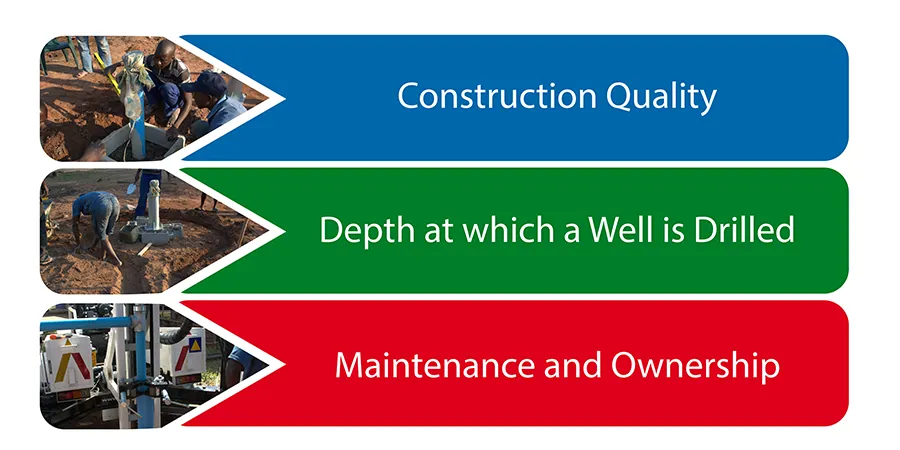
One of the most significant factors is the depth at which a well is drilled. Shallow wells may initially produce water, but they are often dependent on less stable sources that are vulnerable to seasonal fluctuations. During periods of reduced rainfall, these wells can become unreliable or cease functioning altogether. In contrast, deeper wells that reach more stable aquifers are far more likely to provide consistent access over time.
Construction quality is another critical element. Wells built using substandard materials or without sufficient oversight may begin to degrade under regular use. Components such as pumps, casings, and seals are subject to wear, and without durable construction, small issues can quickly escalate into system-wide failures.
Equally important, though often overlooked, is the question of maintenance and ownership. A well that is installed without a clear plan for ongoing care is inherently vulnerable. When communities are not equipped with the tools, training, and responsibility needed to maintain their water systems, even minor mechanical issues can render a well unusable. Over time, these systems are frequently abandoned.
Sources:
https://www.unicef.org/water-sanitation-and-hygiene-wash
https://www.who.int/news-room/fact-sheets/detail/drinking-water

It is important to recognize that not all water initiatives are designed with the same objectives in mind. Some projects prioritize rapid deployment and immediate visibility, focusing on the number of wells installed rather than the durability of those systems over time. While this approach can generate short-term results, it often fails to address the underlying conditions necessary for sustained impact.
By contrast, effective clean water solutions are built on a different set of priorities. They emphasize not only the initial provision of water, but also the structural, environmental, and social factors that determine whether that provision can be maintained. This includes careful site selection, appropriate engineering methods, and long-term community engagement.
Organizations such as the World Bank and UNICEF consistently emphasize that sustainable water access depends on governance, maintenance systems, and local ownership, not just infrastructure alone.
Sources:
https://www.worldbank.org/en/topic/water/publication
https://www.unicef.org/wash/water
A well that continues to serve a community effectively over time reflects a coordinated approach that addresses both technical and human factors. From a technical standpoint, drilling to greater depths increases the likelihood of accessing stable water sources that are less susceptible to environmental variability. This alone can significantly improve the reliability of a well.
Equally important is the quality of construction. Durable materials, careful installation, and consistent oversight contribute to systems that are better equipped to withstand daily use and natural wear. However, even the most well-constructed system will eventually require maintenance, which brings the focus to the role of community involvement.
Long-term success depends on whether the community itself is prepared to take ownership of the system. This includes having access to the necessary tools, understanding how to perform basic maintenance, and recognizing the well as a shared resource that requires ongoing care.
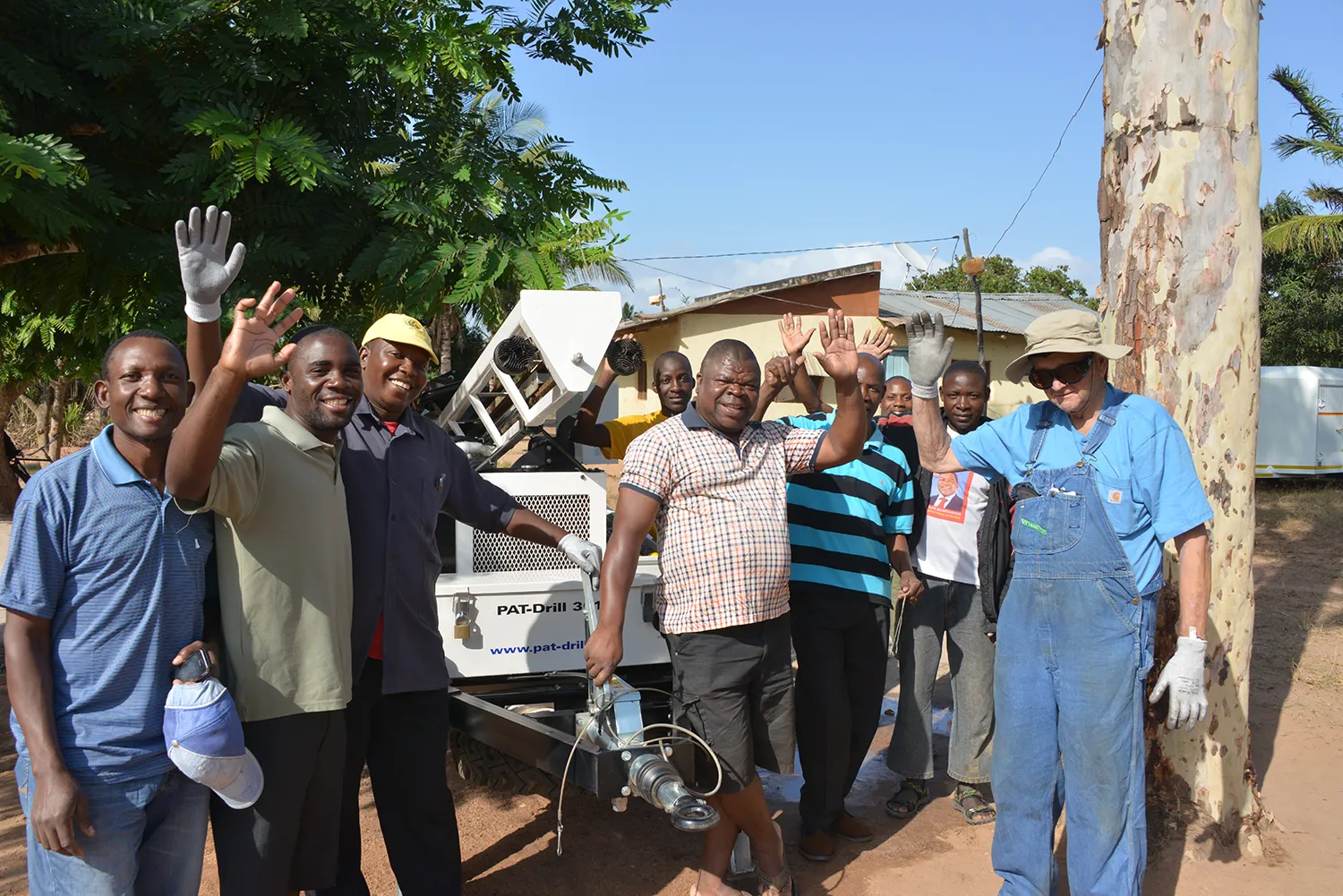
At Water4Life Mozambique, these principles are reflected in a model that prioritizes both depth and durability. Wells are drilled significantly deeper to reach more reliable aquifers, and projects are completed at a cost of approximately $6,900, allowing for efficient use of resources without compromising quality. Work is carried out by trained Mozambican teams, and each village is equipped with the tools and training necessary to maintain its own system over time.
A useful way to understand the broader issue is to reconsider how success is defined in the context of projects to drill water wells in Africa. If success is measured solely by the number of wells installed, then many initiatives appear effective. However, if success is defined by the number of wells that remain functional and continue to serve communities over time, the evaluation becomes more rigorous.
This shift places greater emphasis on water well sustainability and highlights the importance of long-term planning, monitoring, and community engagement. It also aligns more closely with the outcomes that truly matter for the people being served.
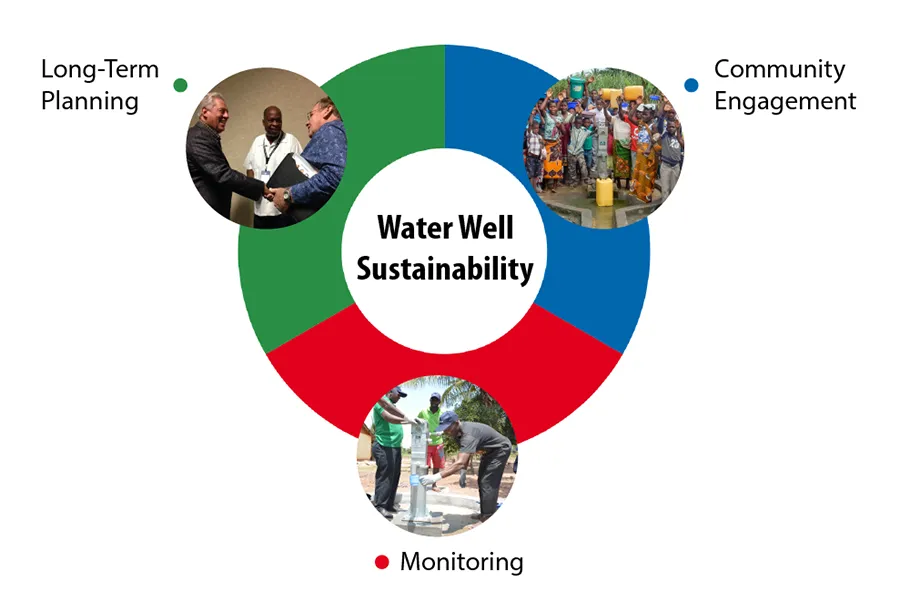
For those considering supporting a clean water charity, understanding these dynamics is essential. The visible completion of a well is only one part of the story. The more meaningful question is whether that well continues to provide reliable access to safe drinking water in the years that follow.
Evaluating impact in this way requires attention to engineering quality, environmental conditions, and local capacity for maintenance. It also requires a commitment to supporting models that prioritize sustainability over short-term visibility.
When donors understand why water wells fail, they are better positioned to invest in solutions that deliver lasting results.
Despite the challenges outlined above, there is a clear path forward. By focusing on approaches that integrate strong engineering practices with local ownership and long-term planning, it is possible to create water systems that serve communities reliably for years to come.
In Mozambique, the need for clean water access remains significant, and the opportunity to create meaningful impact is equally substantial. Supporting projects that prioritize sustainability, depth, and community involvement is one of the most effective ways to contribute to long-term change.
The goal is not simply to build more wells, but to build wells that last for generations to come.
Water wells often fail due to shallow drilling, poor construction, or lack of maintenance. Long-term success requires deeper wells and local ownership.
Sustainability depends on reliable water sources, durable construction, and equipping communities to maintain the system.
A properly built and maintained well can provide consistent access to clean water for many years.
Deeper wells reach more stable aquifers, reducing the risk of seasonal failure.
By supporting organizations that prioritize long-term sustainability and community involvement.
Invest in models that combine engineering quality, local ownership, and long-term planning.